
E-Bike Battery Swapping: What Fleet Operators Should Know
For shared and commercial e-bike fleets, e-bike battery swapping can reduce charging downtime and keep vehicles available during high-demand periods. Instead of waiting for a depleted battery to recharge, operators can replace it with a charged pack and return the vehicle to service.
The value of battery swapping depends on the whole workflow. Battery access, handling, capacity, charging, and maintenance all affect whether an e-bike battery swap actually improves fleet efficiency. For operators with intensive daily usage, these factors should be evaluated together.
Can You Swap an E-Bike Battery?
Yes, when an e-bike is designed with a removable battery. This allows operators to charge batteries separately from vehicles and prepare charged packs before they are needed.
Removable vs. Fixed E-Bike Batteries
A removable e-bike battery gives fleet operators greater flexibility. Technicians can take depleted batteries to a dedicated charging area while the e-bike remains available once a charged pack is installed.
Fixed batteries require the whole vehicle to remain near a charging point. This can be practical for low-use applications, but may create more downtime in shared fleets. For a broader look at how charging infrastructure affects fleet availability, see how to build an efficient charging strategy for shared e-scooter and e-bike fleets.
E-Bike Battery Replacement vs. Battery Swapping
E-bike battery replacement usually means changing an aging or damaged battery. Battery swapping is a routine operating process in which a depleted battery is exchanged for a charged one.
A fleet may perform many swaps during a battery's useful life before replacement becomes necessary. Operators should therefore consider swapping, charging, and eventual battery replacement as separate parts of fleet planning.
Why E-Bike Battery Swapping Matters for Fleet Operations
Private riders can often charge overnight, while shared e-bikes may be used repeatedly throughout the day. For these fleets, every hour a vehicle spends charging can affect availability and potential revenue.
The International Energy Agency identifies electric two- and three-wheelers as the most electrified road-transport segment globally. Its recent analysis also notes battery swapping as an option for reducing charging downtime in some commercial applications.
Reduce Vehicle Downtime
A quick battery swap allows a depleted e-bike to return to service without waiting for a complete charging cycle. This can be useful during commuting peaks, tourism periods, and other high-demand windows. Operators managing larger shared fleets can also refer to how to reduce fleet maintenance costs for shared electric scooters for practical strategies to improve vehicle uptime.
Keep Fleet Vehicles in Service
The number of vehicles owned is not the same as the number available to riders. Maintaining a pool of charged batteries allows operators to replace depleted packs and keep more vehicles active.
This approach can be particularly useful for fleets with high daily mileage or multiple operating shifts.
Simplify Daily Fleet Operations
Battery swapping can centralize charging work. Staff can collect depleted batteries, inspect them, recharge them, and prepare them for deployment instead of moving complete e-bikes to charging areas.
A practical workflow can include:
- Battery condition checks before charging.
- Charging and storage in designated areas.
- Recording battery status and usage.
- Installing charged batteries during fleet preparation.
What Makes an E-Bike Battery Easy to Swap?
A battery being removable does not automatically make it suitable for commercial use. Operators should consider how easily technicians can access, remove, carry, and reinstall the pack.
Battery Access and Removal Design
The battery should be accessible without complicated disassembly. Simple release and locking mechanisms can reduce handling time and make the e-bike battery swap process easier to standardize.
Battery Position and Handling
Battery position affects technician ergonomics. A pack that requires awkward lifting or movement around the frame can add unnecessary effort when staff perform repeated swaps.
Operators should evaluate weight, grip points, installation direction, and access position as part of the selection process.
Quick Battery Swap for High-Use Fleets
The benefit of a quick battery swap comes from repetition. Saving a small amount of time on one vehicle can become significant when technicians process dozens or hundreds of batteries each day. A predictable swap procedure can also reduce training requirements and make fleet preparation more consistent.
Why Side-Loading Batteries Can Be Better for Fleet Use
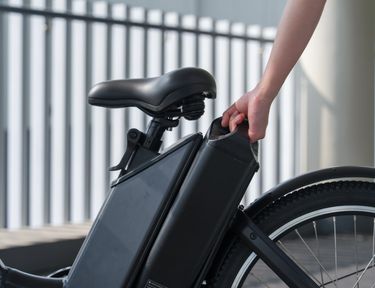
Battery orientation can influence the practicality of daily fleet work. A side-loading battery allows access from the side of the frame rather than requiring the pack to be lifted vertically from above.
Easier Access Without Heavy Lifting
Side access can make repeated battery handling more convenient, depending on the battery's weight and mounting system. It may reduce awkward vertical lifting and help technicians work more naturally.
This can be valuable when staff process multiple batteries during a shift.
A More Practical Battery Swap Workflow
A side-loading configuration can support a consistent workflow: unlock the battery, remove it, inspect the pack, install a charged battery, and confirm that it is secure.
Standardized procedures can make staff training easier and reduce variation between operators. The actual workflow should still be tested in the intended operating environment.
What Should Fleet Operators Consider Before Choosing a Swappable E-Bike?
Battery capacity is only one part of the decision. Operators should consider access, daily mileage, charging resources, durability, and maintenance together.
Battery Access and Swap Time
Measure the complete process, including access, removal, replacement, and locking. A simple procedure can reduce labor requirements and help vehicles return to service faster.
Battery Capacity and Daily Usage
Battery capacity should match real operating conditions. Long routes may require more usable energy, while high-turnover fleets may benefit from rapid swapping and sufficient battery inventory.
Operators should assess daily mileage, terrain, rider load, weather, and utilization instead of relying only on maximum claimed range.
Durability and Fleet Maintenance
Shared e-bikes generally experience more frequent use than privately owned bicycles. Battery housings, connectors, mounting systems, and locks should therefore withstand repeated handling.
Battery performance should be tracked through fleet maintenance procedures so operators can identify declining capacity or abnormal charging behavior before reliability is affected. For a complete breakdown of fleet maintenance costs and planning considerations, read electric scooter maintenance cost: a complete breakdown for fleet operators.
E-Bike Battery Features for Fleet Operations
| Battery Feature | Fleet Benefit |
|---|---|
| Removable design | Enables charging away from the vehicle |
| Side-loading battery | Simplifies access and handling |
| Quick swap capability | Reduces vehicle downtime |
| Suitable capacity | Supports daily operating requirements |
| Durable construction | Supports repeated commercial use |
| Serviceable design | Simplifies inspection and replacement |
OKAI EB001: Designed for Easier Battery Swapping
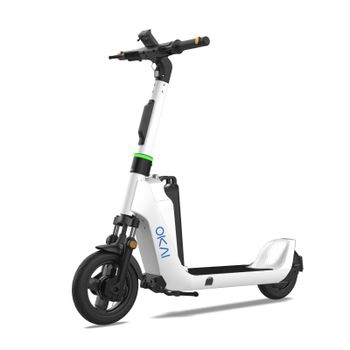
The OKAI EB001 is positioned as a shared electric bike with an external battery configuration intended to make battery handling more practical. According to OKAI's product information, it offers a claimed range of up to 70 km, a maximum speed of 25 km/h, rated power of 250 W, and peak power of 500 W.
Actual performance depends on factors such as rider weight, terrain, temperature, and riding conditions, while local regulations should determine applicable speed and power requirements.
Side-Loading Quick Battery Swap
The EB001 uses a side-loading battery design, allowing the pack to be accessed from the side of the e-bike. This can provide a more direct removal process than designs that require vertical lifting through the frame.
For operators performing frequent electric bike battery swap procedures, easier side access can support a consistent charging and deployment workflow.
Designed for Practical Fleet Operations
The EB001 is designed for shared mobility applications rather than only private recreational use. Its external battery arrangement can be evaluated alongside charging, maintenance, and vehicle deployment requirements. For fleet operators, battery access should be considered as part of the complete operating system rather than as an isolated product feature.
Conclusion
E-bike battery swapping can help shared and commercial operators reduce downtime and maintain vehicle availability. A well-designed removable e-bike battery should combine accessible handling, suitable capacity, reliable charging, and practical maintenance.
For operators evaluating a side-loading battery solution, OKAI's EB001 combines accessible battery design with fleet-oriented specifications, making it a practical option to consider for commercial e-bike operations. To compare the full range of OKAI fleet e-bike models and their specifications, visit how to choose the right e-bike for fleet and shared mobility programs.
FAQ: E-Bike Battery Swapping
Can you swap out an e-bike battery?
Yes, provided the e-bike uses a removable battery. A depleted pack can be exchanged for a charged one, allowing the vehicle to return to service while the removed battery is recharged.
How often do e-bike batteries need to be replaced?
There is no universal replacement interval. Battery life depends on charging cycles, temperature, usage, storage, and maintenance. Operators should monitor performance and replace packs when capacity or reliability no longer meets operational requirements. For related guidance on battery care, see does fast charging damage e-bike batteries? lifecycle impact for fleet buyers.
Is a removable battery better for fleet e-bikes?
It can be useful for high-use fleets because batteries can be charged separately from vehicles. However, operators should also evaluate security, durability, weight, charging infrastructure, and the complete swap workflow.
What should fleet operators look for in a swappable e-bike battery?
Look for accessible mounting, secure locking, manageable weight, suitable capacity, durability, charging compatibility, and a practical quick battery swap process. The design should also fit existing maintenance and storage procedures.

Phone: 1-800-660-3498
Email:
nihao@okai.co
(for business)
b2bsupport@okai.co
(for tech support)
Copyright © 2023 OKAI all rights reserved.