
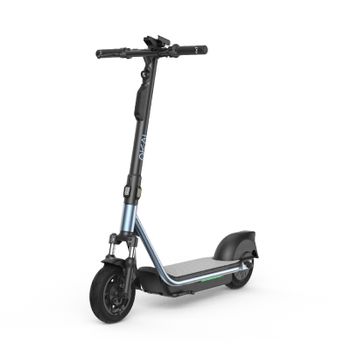

Electric Motorcycle Top Speed: How Fast Can an Electric Motorcycle Go?
How fast can an electric motorcycle go? The answer depends on several factors, including motor power, battery performance, vehicle design, rider weight, and terrain. Different electric motorcycles are built for different purposes, so their maximum speeds can vary considerably.
However, top speed alone does not determine how a vehicle performs in real-world conditions. Acceleration, torque, braking, handling, and range all influence the riding experience.
Understanding these factors can help riders compare electric motorcycles more effectively and identify a model that suits their intended use.
What Is the Top Speed of an Electric Motorcycle?
There is no universal top speed for electric motorcycles. Some models prioritize low-speed mobility and efficiency, while others are designed for recreational riding or more demanding terrain.
When comparing specifications, it is important to distinguish between three measurements:
- Rated power: The motor's specified power rating under defined operating conditions.
- Maximum power: The peak power output available under certain conditions.
- Top speed: The maximum speed specified by the manufacturer under its stated test conditions.
These measurements describe different aspects of performance. A higher maximum power rating does not automatically translate into a proportionally higher top speed.
For example, the OKAI EM20 Street Stunt Electric Motorcycle has a manufacturer-stated maximum speed of 34 mph (56 km/h). This provides a concrete reference point, but the figure should be considered alongside the vehicle's other specifications and intended use.
Actual performance may vary depending on rider weight, battery charge, temperature, terrain, and other operating conditions.
What Factors Affect an Electric Motorcycle's Top Speed?
An electric motorcycle's speed depends on how its powertrain, battery, and mechanical components work together. The following factors are particularly important when comparing models.
1. Motor Power and Torque
Motor power and torque are related, but they are not interchangeable.
Power describes the rate at which the motor delivers energy, while torque describes rotational force. Torque can influence how a vehicle responds when accelerating or climbing, whereas achievable top speed depends on the broader powertrain and vehicle design.
When reviewing specifications, compare rated power and maximum power separately. Check whether the manufacturer provides test conditions and avoid judging performance based on wattage alone.
2. Battery Voltage and Power Delivery
The battery supplies the electrical energy required by the motor and control system. Battery voltage, current delivery, state of charge, temperature, and battery management can all affect available performance.
A battery's capacity is usually expressed in amp-hours (Ah) or watt-hours (Wh). These figures provide information about energy storage, but they do not independently determine top speed.
Battery condition also matters. A vehicle may perform differently at a low state of charge or under unfavorable temperature conditions.
When comparing models, consider the battery and motor as a complete system rather than treating either specification as a direct predictor of speed.
3. Rider Weight and Load
Rider weight and additional load affect the demands placed on the motor, particularly during acceleration and uphill riding.
A heavier load may make it more difficult to maintain speed on a gradient. It can also influence energy consumption and practical range.
For this reason, maximum load capacity is worth checking alongside top speed. A vehicle's stated speed should not be assumed to remain unchanged under every load condition.
4. Terrain and Gradient
Terrain can have a significant effect on electric motorcycle performance.
On a smooth, level surface, a vehicle may operate under different conditions than it would on a steep incline or a loose surface such as sand or gravel. Gradients increase the power required to maintain movement, while uneven terrain can affect traction and handling.
If a vehicle will be used across different environments, review its tire design, suspension, stated climbing capability, and intended terrain. A maximum gradient specification is useful for comparison, but actual climbing performance depends on several interacting factors.
5. Aerodynamics and Vehicle Design
At higher speeds, aerodynamic drag becomes increasingly important. Vehicle shape, rider posture, and the exposed area facing the airflow can all influence the power required to maintain speed.
Tire characteristics, rolling resistance, frame geometry, and mechanical condition also contribute to overall performance.
This is why two vehicles with similar motor ratings may not achieve the same maximum speed. Their complete designs and operating conditions can differ.
Top Speed vs. Range: What Is the Difference?
Top speed and range are two distinct performance measures.
Top speed refers to the maximum speed a vehicle can reach under specified conditions. Range refers to the distance it can travel on a charge under a particular set of conditions.
Riding at higher speeds generally requires more energy because aerodynamic resistance increases with speed. Frequent acceleration, steep gradients, heavy loads, low temperatures, and tire condition can also affect energy consumption.
A manufacturer's maximum range should therefore be treated as a reference figure rather than a guarantee of everyday performance.
When comparing electric motorcycles, consider these questions:
- Is the stated range based on a clearly described test procedure?
- Does the intended riding environment involve frequent gradients or rough surfaces?
- Will the vehicle regularly carry a heavier load?
- Is maximum speed more important than distance per charge for the intended use?
The right balance depends on the vehicle's purpose. A model chosen for recreational performance may have different priorities from one selected for routine transportation.
Which Other Specifications Should You Compare?
Top speed is useful, but a broader specification review provides a more complete picture of vehicle performance.
| Specification | Why it matters |
|---|---|
| Rated and maximum power | Helps explain the motor's stated output |
| Maximum torque | Provides context for rotational force and response |
| Battery voltage and capacity | Helps assess the electrical system and stored energy |
| Maximum stated range | Provides a reference for distance per charge |
| Braking system | Indicates the type of braking equipment fitted |
| Suspension | Helps assess the vehicle's approach to uneven surfaces |
| Tires | Provides information about the intended riding environment |
| Maximum load | Defines the manufacturer's stated load limit |
| Water-resistance rating | Describes the specified level of protection under defined test conditions |
Specifications should be assessed together. For example, a powerful motor does not compensate for an unsuitable tire configuration or poorly maintained brakes.
For a broader introduction to electric vehicle specifications, see our complete B2B buyer's guide to reading electric scooter specifications, which discusses how to evaluate performance and practical features when comparing models.
How Do Riding Style and Maintenance Affect Performance?
Even when two vehicles have similar specifications, their performance can differ in everyday use.
Riding Style
Repeated rapid acceleration and high-speed riding can increase energy consumption. Smooth acceleration and adapting speed to the terrain can help reduce unnecessary energy use.
Riders should also select riding environments appropriate to the vehicle's design and their own experience. Stunt-oriented riding requires particular care, suitable protective equipment, and a permitted environment.
Tire and Brake Condition
Tire pressure, tire wear, brake adjustment, and general mechanical condition can affect how a vehicle handles and operates.
Follow the manufacturer's maintenance instructions and inspect components at the recommended intervals. Do not attempt to increase top speed by modifying the motor, controller, or other systems beyond the manufacturer's specifications.
Battery Care
Use the specified charger and follow the manufacturer's charging and storage guidance. Battery condition can affect available performance over time, so signs of damage or abnormal operation should be assessed by a qualified service professional.
For additional maintenance considerations, see our guide to electric scooter maintenance for maximum longevity.
Are Electric Motorcycles Legal on Public Roads?
Not every electric motorcycle or electric two-wheeler is automatically permitted on public roads.
Legal requirements vary by jurisdiction and may depend on vehicle classification, maximum speed, motor output, minimum rider age, licensing, registration, insurance, and equipment requirements.
A vehicle marketed for stunt or off-road use should not be assumed to be road-legal simply because it has a specified maximum speed or lighting equipment.
Before purchasing or using a vehicle, check the rules that apply in the intended location. If a model will be sold in multiple markets, confirm its classification and applicable compliance requirements separately for each market.
For an overview of regulations across different regions, see our electric scooter laws around the world: what's legal and what's not.
Frequently Asked Questions
How fast can an electric motorcycle go?
There is no single speed that applies to every electric motorcycle. Maximum speed varies by model, powertrain, vehicle design, and intended use. The manufacturer's published specification is the most appropriate starting point when evaluating a particular model.
Does higher wattage mean a higher top speed?
Not necessarily. Motor power is one factor, but battery performance, controller settings, vehicle design, rider load, terrain, and aerodynamic drag also affect achievable speed.
Does riding faster reduce electric motorcycle range?
Generally, higher speeds require more energy because aerodynamic resistance increases. Actual range also depends on acceleration, terrain, temperature, rider weight, battery condition, and other operating factors.
Does rider weight affect top speed?
It can. A greater load may affect acceleration and the ability to maintain speed, especially uphill. The extent of the effect depends on the vehicle and riding conditions.
What should I check before choosing an electric motorcycle?
Compare maximum speed with motor power, torque, battery specifications, range, braking, suspension, tires, maximum load, and intended terrain. Also verify that the vehicle's classification and intended use comply with local regulations.
Conclusion
An electric motorcycle's top speed is only one measure of its performance. Motor power, torque, battery delivery, rider load, terrain, aerodynamics, and vehicle design all influence how a model performs.
Rather than selecting a vehicle based on maximum speed alone, compare its full specification set against the intended riding environment and applicable regulations.
For readers interested in a specific example, the OKAI EM20 Street Stunt Electric Motorcycle lists a maximum speed of 34 mph (56 km/h). Reviewing the complete specifications alongside the vehicle's intended use provides a more reliable basis for comparison.
It is possible that you also want to know: How Fast Do E-Bikes Go? A Guide to Speed, Limits, and Real-World Performance

Phone: 1-800-660-3498
Email:
nihao@okai.co
(for business)
b2bsupport@okai.co
(for tech support)
Copyright © 2023 OKAI all rights reserved.