
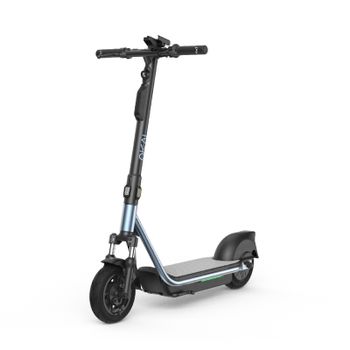

What Makes an Electric Scooter Fleet-Ready? Key Features for Commercial Operations
A fleet-ready electric scooter is built for repeated commercial use, not simply for occasional personal rides. For an electric scooter fleet, the priorities are therefore different: durability, serviceability, battery management, connectivity, safety, and operational data matter as much as riding comfort.
For shared mobility operators, rental businesses, and other commercial users, a commercial electric scooter should be evaluated as part of a complete operating system. A scooter that performs well for an individual rider may still create excessive maintenance, downtime, or management costs when deployed across hundreds of vehicles.
What Does "Fleet-Ready" Mean for an Electric Scooter?
A fleet-ready scooter is designed or configured to withstand frequent use while remaining practical to monitor, maintain, charge, and redeploy at scale. The term does not refer to one universal technical specification. Instead, it describes whether a vehicle's hardware and supporting systems fit the demands of commercial operations.
A useful evaluation should consider the entire operating cycle: how often the scooter is ridden, where it operates, how quickly it can be serviced, how its battery is managed, and whether operators can monitor the vehicle remotely.
For a shared electric scooter, these considerations become even more important because the operator typically has less control over how individual riders handle the vehicle. For a detailed look at how shared and consumer models compare, see shared electric scooter vs. consumer scooter: which one is right for commercial use.
The Key Features of a Fleet-Ready Electric Scooter
A reliable fleet scooter needs more than a powerful motor. Its components should work together to reduce operational interruptions and make routine fleet management more predictable.
Durability for High-Frequency Daily Use
Commercial scooters may experience substantially more starts, stops, impacts, weather exposure, and rider turnover than privately owned vehicles. This makes electric scooter durability a fundamental consideration.
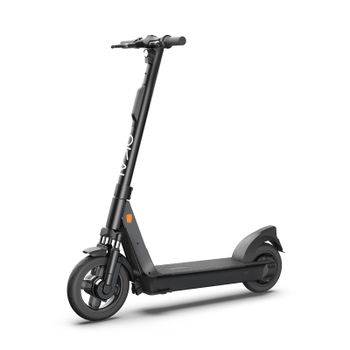
Frame construction is particularly important because repeated loads can affect structural components over time. For example, OKAI's ES400A is specifically designed for shared operations and uses aluminum-alloy extrusions intended to provide structural stability and durability in daily shared use.
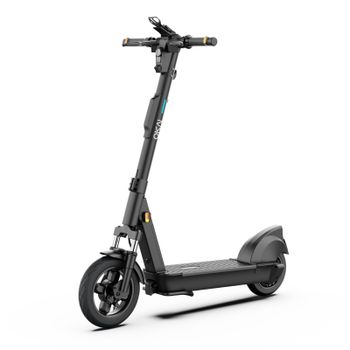
The ES700 takes a different approach, using an industrial-grade Q500 steel frame and a coating process designed to improve resistance to dust and erosion, offering a more robust construction option for high-demand operating environments.
For fleet buyers, however, manufacturer claims should be considered alongside independent testing, warranty terms, field data, and the actual operating environment.
Components Designed for Faster Maintenance
Fleet economics are affected by how quickly a vehicle can return to service after a problem. A scooter that requires extensive disassembly for routine repairs may generate more labor and downtime than a mechanically simpler alternative.
Operators should therefore examine:
- Accessibility of frequently serviced components
- Availability of replacement parts
- Diagnostic procedures and technical documentation
- Ease of replacing batteries or other serviceable components
- Manufacturer response times for technical support
The goal is not to eliminate maintenance. Commercial fleets need a maintenance process that is predictable enough to support high vehicle availability. For a breakdown of what maintenance costs typically look like at scale, see electric scooter maintenance cost: a complete cost breakdown for fleet operators.
Battery Systems That Support Fleet Operations
Battery design directly affects vehicle utilization. If a scooter must remain parked for long periods during charging, operators may need more vehicles to provide the same level of service.
A fleet-ready battery system should therefore be evaluated for usable capacity, charging requirements, battery management, replacement procedures, and compatibility with the operator's charging workflow.
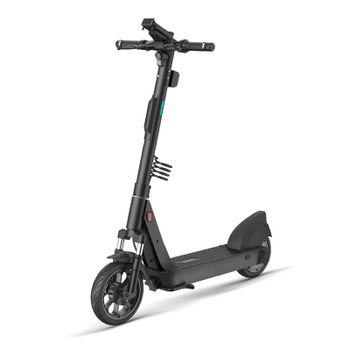
The ES400AV2, for example, combines a swappable battery pack with a smart battery management system. OKAI also lists 4G IoT connectivity and 450 W rated power for this shared-mobility model. For more on how swappable batteries affect fleet operations, see e-bike battery swapping: what fleet operators should know.
Battery safety is equally important. The U.S. Consumer Product Safety Commission has urged manufacturers and importers of micromobility products to follow applicable safety standards, including UL 2272 for personal e-mobility devices.
CPSC also warns that chargers must be compatible with the specific battery system rather than relying on generic "universal" chargers.
IoT Connectivity and Vehicle Monitoring
An IoT electric scooter can provide operational information that is difficult to obtain from a vehicle without connectivity. Depending on the system, fleet operators may monitor location, vehicle status, battery information, usage, and other operational data.
The value of connectivity is not simply having more data. The data should support practical decisions such as identifying vehicles that need attention, understanding utilization patterns, and coordinating maintenance.
The ES400AV2 includes 4G IoT connectivity and high-precision positioning, illustrating how an IoT electric scooter can be designed around the needs of shared-mobility operations.
Why Consumer Scooters Often Struggle in Commercial Fleets
A consumer scooter and a commercial electric scooter may share similar basic components, but their operating assumptions can be very different. A privately owned scooter may be used by one person for commuting, while a shared fleet scooter can be ridden by many users with different riding habits.
Higher Usage Creates Different Wear Patterns
Frequent rental or shared use can expose components to repeated acceleration, braking, curb impacts, uneven surfaces, and outdoor storage. This does not automatically mean every consumer scooter is unsuitable for commercial use, but it means fleet buyers need evidence that the product is designed for the intended duty cycle.
For example, the ES400A is explicitly positioned by OKAI as a shared-mobility model, with its construction developed around the demands of shared operations.
The key question is therefore not simply "How strong is the scooter?" but "How well does its design match the actual operating environment?"
Maintenance Downtime Has a Business Cost
In a fleet, an unavailable scooter is not merely a product inconvenience. It can mean lost rental opportunities, additional labor, transportation for collection, and reduced fleet availability.
This makes serviceability a commercial consideration. A slightly more expensive fleet scooter can potentially be more economical if it remains operational longer or can be repaired more efficiently.
How to Evaluate an Electric Scooter Before Fleet Deployment
Before purchasing an electric scooter fleet, operators should evaluate the vehicle under realistic operating conditions rather than relying only on showroom specifications.
Consider Your Operating Environment
Start with geography and usage. A fleet operating in a flat city with mild weather has different requirements from one exposed to hills, rain, rough pavement, coastal air, or high temperatures.
Consider:
- Road and terrain conditions
- Expected daily utilization
- Weather and water exposure
- Typical rider weight and behavior
- Local speed, safety, and certification requirements
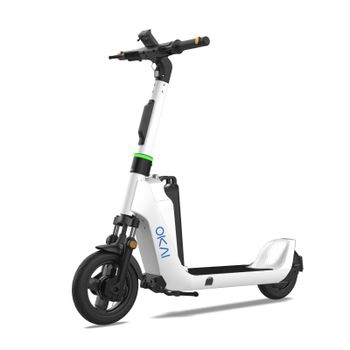
For example, the ES600P uses a low-center-of-gravity design intended to improve stability during straight riding and cornering, while its lighting system provides multiple configurable modes for visibility and vehicle-status indication.
Check Serviceability and Spare Parts Access
Ask the manufacturer how replacement parts are supplied and which components can be serviced locally. A good commercial program should have a defined process for spare parts, diagnostics, warranty claims, and technical support.
This becomes especially important as fleet size increases. A process that works for 20 vehicles may become inefficient when applied to 500 or 5,000.
Evaluate Fleet Software Compatibility
Hardware connectivity is only useful when it works with the operator's broader fleet management system.
Before deployment, confirm what data the scooter can provide, how that data is transmitted, what APIs or integration options are available, and whether the platform can support the operator's existing workflow.
Operators should also consider cybersecurity, data ownership, connectivity coverage, and the long-term availability of software support.
Fleet-Ready Scooter Evaluation Checklist
| Evaluation Area | What to Check | Why It Matters |
|---|---|---|
| Durability | Frame, components, environmental resistance | Supports repeated commercial use |
| Battery | Capacity, BMS, charging, swap options | Affects vehicle utilization |
| Maintenance | Service access and replacement parts | Reduces downtime |
| Connectivity | IoT, positioning, vehicle data | Supports fleet management |
| Safety | Applicable standards and testing | Helps manage operational risk |
| Software | Integration and data compatibility | Enables scalable monitoring |
| Support | Warranty, parts, technical assistance | Supports long-term operation |
Choosing a Scooter That Can Scale With Your Fleet
Selecting a fleet-ready electric scooter should be based on the fleet's future operating model, not only its initial purchase order.
For a small pilot, a straightforward platform with manageable maintenance may be sufficient. Once utilization grows, however, operators may need better battery logistics, remote diagnostics, more sophisticated fleet management, and stronger technical support.
This is why manufacturers offering several commercial platforms can be useful. OKAI's B2B range includes shared-mobility models such as the ES400A and ES400AV2, as well as the ES600P and ES700, allowing buyers to compare different approaches to durability, power, battery configuration, visibility, and operational efficiency.
A scalable procurement strategy should also include a pilot phase. Deploying a limited number of vehicles first can reveal real-world maintenance patterns, battery performance, rider behavior, connectivity issues, and service requirements before a full-scale rollout. For a comprehensive overview of the shared scooter procurement process, visit shared electric scooters: the complete fleet buyer's guide.
FAQ
What makes an electric scooter fleet-ready?
A fleet-ready electric scooter combines durable construction, practical serviceability, suitable battery management, connectivity, safety features, and support for commercial fleet management.
Are shared electric scooters different from consumer scooters?
They can be. Shared electric scooters are typically designed around higher utilization and repeated use by different riders. Their durability, serviceability, and connectivity requirements may therefore be greater than those of privately owned scooters.
Why is IoT important for an electric scooter fleet?
IoT connectivity can provide vehicle and location data that helps operators monitor assets, identify issues, manage utilization, and coordinate maintenance. Its usefulness depends on software integration and the quality of the available data.
What should I check before buying a fleet scooter?
Evaluate durability, battery architecture, maintenance access, spare-parts availability, safety requirements, IoT connectivity, software compatibility, warranty coverage, and technical support.
Can one scooter model work for every fleet?
Not necessarily. A suitable commercial electric scooter depends on terrain, climate, rider behavior, regulations, utilization, and the operator's business model. A model optimized for one city or fleet may not be the best choice elsewhere.
Conclusion
A fleet-ready electric scooter should be judged by how effectively it performs across the entire commercial operating cycle—not simply by speed, range, or appearance. Durability, serviceability, battery systems, IoT connectivity, safety, and long-term manufacturer support all contribute to the real operating value of an electric scooter fleet.
For operators evaluating commercial and shared-mobility vehicles, OKAI is worth considering because its B2B range includes purpose-oriented fleet scooter platforms and models incorporating features such as reinforced construction, swappable batteries, IoT connectivity, and fleet-focused design. To understand how to start building a commercial fleet from the ground up, see how to start an e-scooter sharing business: a practical guide for new fleet operators.

Phone: 1-800-660-3498
Email:
nihao@okai.co
(for business)
b2bsupport@okai.co
(for tech support)
Copyright © 2023 OKAI all rights reserved.